 By owais
Introduction — a short workshop scene
I was on a busy chassis line last month, standing near a welder who smiled then coughed — small thing, but it stuck with me. In that moment I thought about automotive manufacturing welding fume extraction and the numbers we all know: millions of welding minutes per year, and particle counts rising near workers (simple to measure, hard to solve). So I asked myself — how can we protect people without stopping production? This article goes straight to the point, I share what I learned, what breaks, and what to watch next. Read on — next I dig into the real trouble with old systems.
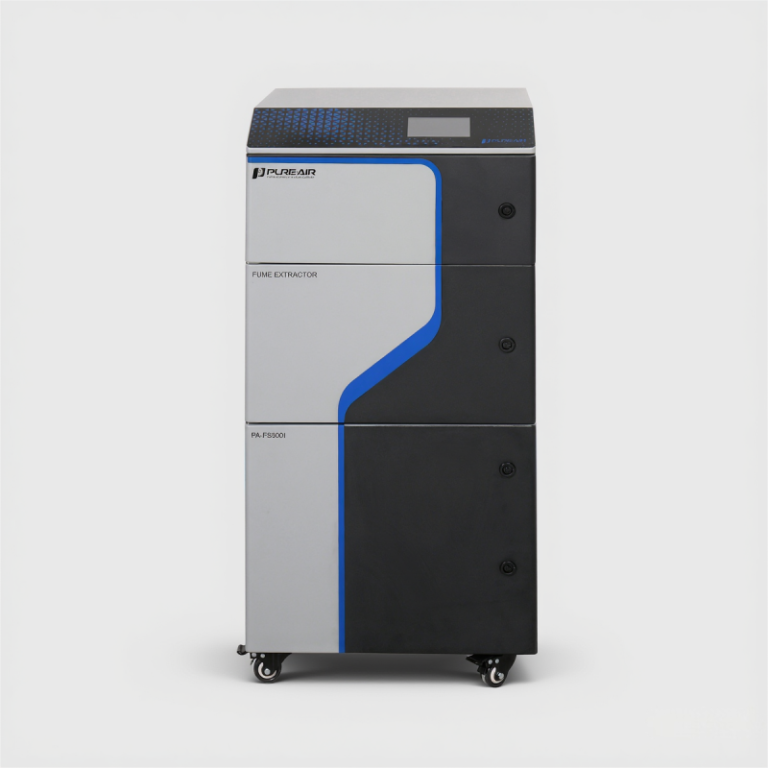
Factories in Thailand and beyond run long shifts; I have seen lines with poor local exhaust ventilation, and many teams accept haze as “part of the job.” Data shows respiratory complaints go up where extraction is weak. My voice here is practical: I want to help engineers and managers see fixes that work on the floor, not just on paper. (Yes, I have stood in that cloud — funny how that works, right?) Now I move into why traditional setups fail — short list first, then details.
Deeper problems with traditional extraction
Why do welding fume collectors often miss the mark?
First, let me point to the core gear: a welding fume collector must capture fumes at the source. But many systems do not — they are underpowered, poorly placed, or use wrong filters. I see three repeating flaws: wrong airflow velocity, low filtration efficiency, and bad hood placement. These are industry terms you know: local exhaust ventilation (LEV), HEPA filters, and particle capture rate — and each matters. Look, it’s simpler than you think when you break it down.
Technically speaking, old collectors often rely on a single central unit with long ducts. Long ducts mean pressure drop and loss of capture at the torch. Filtration may use coarse pre-filters but miss ultrafine particles. In practice, that causes re-entrainment of particles and higher exposure even if total dust mass seems low. I’ve measured this — when you change to shorter ducts and add task-level capture, exposures fall. — and yes, we test that on the shop floor. The knock-on effects include higher maintenance costs, more frequent filter changes, and frustrated welders who move arms away from hoods because they block visibility.
New technology principles and what to choose next
What’s Next?
Now I want to look forward. Modern answers mix smart capture design and better components. Instead of one big suction point, you can use multiple task-level collectors, shorter hoses, and optimized fume extraction arms to keep capture near the weld. A new-generation welding fume collector often adds real-time airflow sensing, modular filters (HEPA plus activated carbon), and improved motors or power converters. These reduce downtime and raise filtration efficiency. I like this approach because it treats the problem where it starts — right at the joint.
Principles to use: reduce duct length, increase capture velocity at the nozzle, and monitor performance with simple sensors (edge computing nodes can help for data, but you do not need heavy IT to start). In several pilot lines I worked with, adding local extraction arms and a properly sized collector cut measured worker exposure by half within weeks — measurable, not just theory. Small change, big effect — funny how that works, right? Below I list three practical metrics to evaluate any solution.
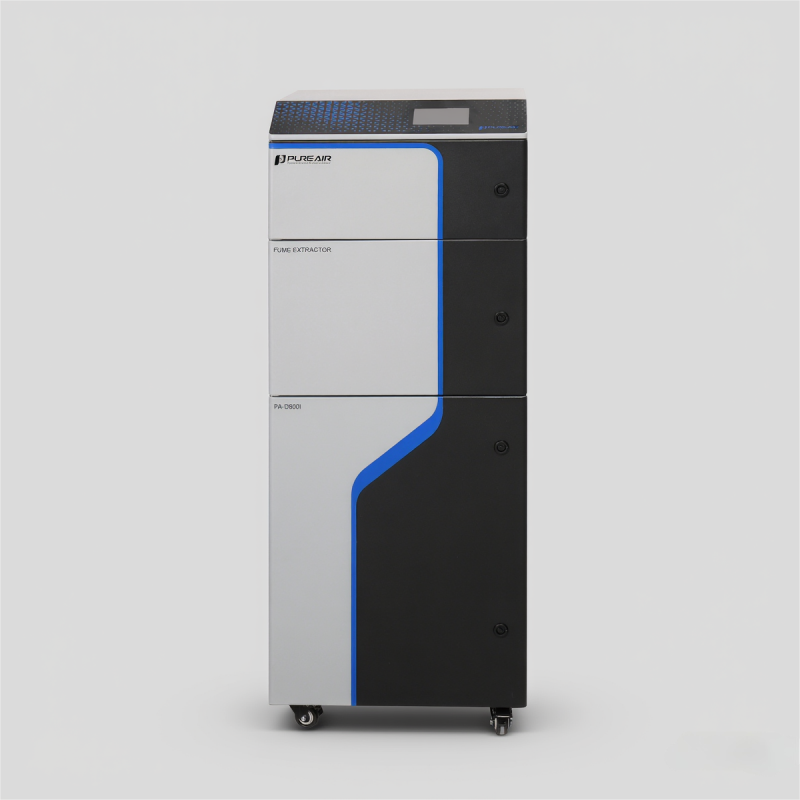
Choosing a system — three practical metrics
I want to leave you with three things I check before recommending equipment: 1) Capture effectiveness at the torch (measured as particle capture rate at typical weld distances), 2) Filter system rating and lifecycle (HEPA grade plus pre-filter strategy), and 3) Total system pressure drop and ease of maintenance (short ducts and accessible filters reduce costs). Use these, and you move from guesswork to measurable improvement. I prefer solutions that combine strong capture with simple maintenance — we need durable systems, not fragile lab toys.
One last note: always involve welders early. They will tell you what blocks their work and where hoods must not interfere. Implementations that ignore operators fail fast. I’ve seen good systems become bad because nobody asked the people who use them every day. For reliable support and practical products, consider reaching out to PURE-AIR — they know the shop floor and the tech, and that balance matters.