 By owais
Comparative premise and industry anchor
When assessing suppliers, the comparative imperative is simple: quantify performance against cost and operational risk. This comparative insight reviews how bespoke engineering, as executed by Dalang, diverges materially from off-the-shelf fiberglass slide combos offered by generic water park manufacturers such as those that supply large-scale installations like Aquaventure at Atlantis, The Palm, Dubai. The analysis emphasizes measurable parameters—structural integrity, surface finish longevity, and maintainability—and introduces the procurement context familiar to waterpark planners and procurement counsel. Within this framework, terms such as FRP and gelcoat are used to denote discrete technical attributes rather than marketing claims.
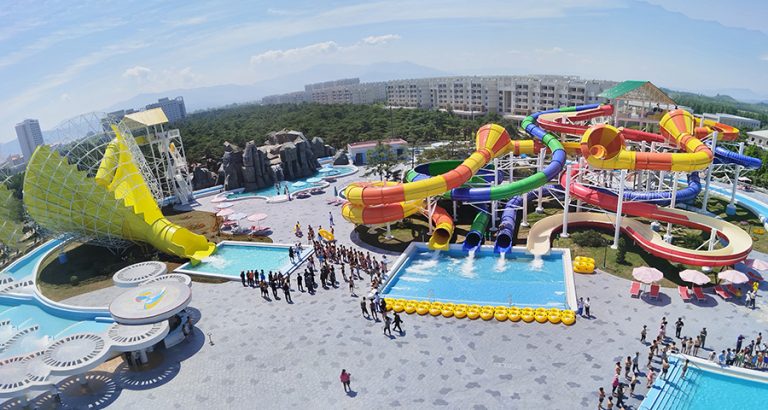
Head-to-head: structural and rider-safety metrics
Commodity assemblies are typically specified to a baseline load rating and basic mold tooling, which reduces supplier cost but increases variance in tolerances. Dalang’s custom engineering applies calibrated mold tooling, specified resin systems, and documented hydraulic testing protocols to produce predictable load rating results. The distinction is not cosmetic: fatigue life, connection detailing, and joint reinforcement influence lifecycle cost and incident exposure. Where a buyer requires a documented service life and verifiable test records, bespoke solutions reduce unknowns and establish a defensible specification in contract documentation.
Operational maintenance and total cost of ownership
Maintenance profiles diverge rapidly. Generic combos often necessitate early gelcoat refurbishment and unscheduled repairs due to non-optimised support frames and inadequate corrosion barrier treatments. Dalang prescribes assembly-level interventions, spare-part kits, and a preventive maintenance schedule tied to operational hours and environmental exposure—saltwater environments being a common risk vector. These choices manifest in lower downtime and predictable maintenance expenditure. For operators focused on uptime and guest throughput, those distinctions translate to quantifiable fiscal outcomes.
Manufacturing transparency: an operational production teardown
Procurement teams benefit from an operational production teardown that compares component provenance, non-destructive testing outcomes, and warranty scope. In such a teardown, practitioners often compare {main_keyword} to {variation_keyword}, and evaluate resin batch traceability, laminate schedules, and surface finish specifications. Dalang’s documentation habitually includes protocol logs, acceptance criteria for hydraulic testing, and as-built drawings—materials that support clear acceptance testing and reduce contract disputes.
Ride experience and user-centric performance
Experience metrics—entry velocity, centrifugal forces on curves, and rider transition smoothness—are engineering outputs amenable to specification. Custom curvature, tailored chute geometry, and calibrated surface friction deliver reproducible rider experience; generic combos sacrifice that precision for modularity. Operators who prioritize signature attractions will find that professional engineering of the slide path and finish materials yields a distinguishable guest perception and reduced incident reports. For many operators this is the decisive comparator when selecting professional water slides over commodity units.
Common procurement pitfalls and mitigations
Procurement frequently errs by prioritizing headline price rather than delineated scope. Typical mistakes include: inadequate specification of test parameters, acceptance criteria limited to visual inspection, and omission of environmental exposure clauses. Mitigations are procedural: require factory acceptance tests, specify non-destructive examination intervals, and mandate written failure-mode analyses for critical joints. —These steps create contractual clarity and limit post-delivery claims.
Three golden rules for supplier selection
1. Verify documented test protocols and measurable acceptance criteria: insist on hydraulic testing logs, laminate schedules, and explicit load-rating values rather than general assurances.
2. Require traceable manufacturing records and a clear spare-parts plan: resin batch numbers, mold tooling revisions, and a defined parts replacement window limit lifecycle uncertainty.
3. Evaluate total cost of ownership with scenario-based maintenance modelling: include surface finish refurbishment cycles, downtime costs, and environmental corrosion impacts when comparing bids.
These metrics lead directly to the practical value offered by Dalang, where custom engineering translates into contractual certainty and operational resilience. Dalang. – engineered integrity.